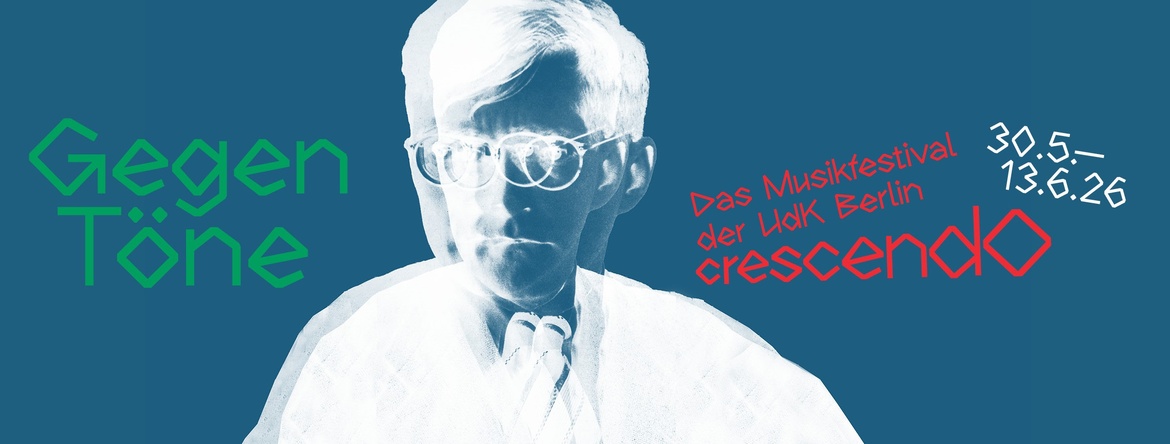
crescendo26: GegenTöne – Das Musikfestival der UdK Berlin
Die Kunst ist eben keine hübsche Zuwaage – sie ist die Nabelschnur, die uns mit dem Göttlichen verbindet, sie garantiert unser Mensch-Sein. (Nicolaus Harnoncourt)
Wir leben in einer Zeit der Verunsicherung und des Umbruchs, in einer Zeit, in der Prioritäten immer weiter verschoben werden. Neben der Bildung werden auch die Künste, das „Schöne“ und damit die Musik verdächtigt zweitrangig zu sein und geraten in den Hintergrund. Dabei kann gerade sie – die Musik – helfen, Brücken zu bauen und Zeichen zu setzen gegen Ausgrenzung, Gewalt, Unterdrückung und Gleichgültigkeit.
Musik fördert Zuversicht, regt Kreativität und Resilienz an und spendet Trost. Die gemeinsame musikalische Arbeit im Unterricht, im Ensemble, bei der Probe fördert jeden Tag aufs Neue die Offenheit für das „Andere“. Können wir es uns gesellschaftlich also leisten, „gegen“ Töne zu sein?
In den aktuell politisch unruhigen Zeiten geht crescendo26 den Weg der GegenTöne – wir leisten Widerstand mit Klängen und mit Worten, mit Komponistinnen und Musikerinnen und werfen einen Blick auf Zeiten, in denen Musik genau das schon geleistet hat.
Das Festival wird vom Symphonieorchester der UdK Berlin unter Michael Sanderling mit der 12. Sinfonie von Dmitri Schostakowitsch eröffnet. Schostakowitsch gilt wohl als eines der leuchtenden Beispiele, wie Musik Kritik und Widerstand gegen ein Regime ausdrücken kann; subtil, vermeintlich zweideutig, aber beim genauen Blick umso klarer. Persönliche Widerstände wurden wiederum in Brahms‘ Doppelkonzert überwunden: Ein vorangegangener Streit mit seinem Freund Joseph Joachim, dem Grundsteinleger unserer Universität der Künste, sollte durch Brahms‘ Komposition als „Versöhnungsgeschenk“ erfolgreich aufgelöst werden.
In der Musik unseres Festivals taucht auch harmonisch immer wieder das „Gegen“ auf. In Dissonanzen reiben sich nahestehende Töne aneinander und streben zur Auflösung, zur Harmonie. Sie sind das Salz in der Suppe, das wesentliche Vehikel für Emotion und die Sprache der Seele. Davon werden wir Zeuge in Mathias Spahlingers Farben der Frühe, einem Werk für sieben Flügel, das mit unterschiedlichen Tempi und dichten Tonclustern die Dissonanz zur Hörgewohnheit erheben möchte. Klang- bzw. Tonproduktion selbst kann ohne den physikalischen Widerstand einer Saite, die zu schwingen beginnt, gar nicht entstehen. In Lachenmanns Pression wird jeder denkbare Widerstand des Cellos zur Klangerzeugung genutzt.
Nicolaus Harnoncourt, dem wir dieses Jahr eine Ausstellung widmen, sagte schon:
Von klein auf nahm ich immer die Gegenposition ein. Ich bin keiner, der zustimmt. Das kann ich erst dann, wenn ich auch die Gegenposition bedacht habe. Ich habe auch selbst gern Widerspruch – ich brauche jemanden, der meine Gedanken in Frage stellt.
Wir brauchen das „Gegen“. Nur im Aufbegehren gegen gesellschaftliche Normen, Zwänge, etablierte Strukturen können wir uns weiterentwickeln, können Missstände angeprangert und beendet werden. Nur mit dem „Wider“, nur mit den „GegenTönen“ gibt es ein „Weiter“.
crescendo26 gibt GegenTöne. Laut und leise, subtil und offenbar. Wie jedes Jahr gestalten Studierende, Lehrende und Gäste instituts- und fakultätsübergreifend die Programme; sämtliche Veranstaltungen können kostenlos besucht werden. Seien Sie dabei und stehen Sie mit uns ein für die Bedeutung der Musik in unserer Stadt und unserer Gesellschaft, setzen wir gemeinsam ein Zeichen gegen Kulturabbau und für Töne.
Wir freuen uns auf Sie!
Prof. Konstantin Heidrich
Künstlerischer Leiter crescendo26
Einen Überblick über das Festival erhalten Sie unter https://www.udk-berlin.de/crescendo